US at 250: Essential Reads, Free to Download!
We are proud to be part of the global conversation about justice and democracy.
Boundless: Native American Abundance in Art and Literature
Edited by Lisa A. Crossman and Heid E. Erdrich

Boundless brings artists and writers together across generations, often drawing together works by members of the same tribe or even the same family to show the history, presence, and futurity of Native American creative and intellectual production.
Abortion Pills: US History and Politics
Carrie Baker

This is the first book to offer a comprehensive history of abortion pills in the United States. Public intellectual and lawyer Carrie N. Baker shows how courageous activists waged a decades-long campaign to establish, expand, and maintain access.
Judicial Rhapsodies: Rhetoric and Fundamental Rights in the Supreme Court
Doug Coulson
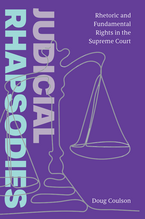
First examining the classical origins of divisions between law and rhetoric, Coulson tracks what he calls an epideictic register—highly affective forms of expression that utilize hyperbole, amplification, and vocabularies of praise—through a surprising number of landmark Supreme Court opinions.
Race and the Law in South Carolina: From Slavery to Jim Crow
John W. Wertheimer

This first title in the “Law, Literature & Culture” series uses six legal disputes from the South Carolina courts to illuminate the complex legal history of race in the U.S. South from slavery through Jim Crow.
Studies into Darkness: The Perils and Promise of Freedom of Speech
Edited by Carin Kuoni and Laura Raicovich

A practical and historical guide to free speech discourse and in-depth investigations that extend far beyond the current moment, featuring poetic responses to the crises present in contemporary culture and society.
Radical Roots: Public History and a Tradition of Social Justice Activism
Edited by Denise D. Meringolo

With contributions from the field’s leading figures, this groundbreaking collection addresses major topics such as museum practices, oral history, grassroots preservation, and community-based learning. It demonstrates the core practices that have shaped radical public history, how they have been mobilized to promote social justice, and how public historians can facilitate civic discourse in order to promote equality.
Unburied Bodies: Subversive Corpses and the Authority of the Dead
James R. Martel

Ranging across time and space from the battlefields of ancient Thebes to the streets of Ferguson, Missouri, and taking in perspectives from such writers as Sophocles, Machiavelli, Walter Benjamin, Hannah Arendt, James Baldwin, Judith Butler, Thomas Lacqueur, and Bonnie Honig, Martel asks why the presence of the abandoned corpse can be seen by both authorities and protesters as a source of power, and how those who have been abandoned or marginalized by structures of authority can find in a lifeless body fellow accomplices in their aspirations for dignity and humanity.
Sentencing in Time
Linda Ross Meyer
Drawing on work in philosophy, legal theory, jurisprudence, and the history of penology, Meyer explores how, rather than condemning prisoners to an experience of time bereft of meaning, we might instead make the experience of incarceration constructively meaningful—and thus better aligned with social objectives of deterring crime, reforming offenders, and restoring justice.
The Limits of Religious Tolerance
Alan Jay Levinovitz
Pressing at the distinction between tolerance and respect, Levinovitz seeks to offer a set of guideposts by which a democratic society could identify and observe a set of limits beyond which religiously grounded claims may legitimately be denied the expectation of unqualified non-interference.
The Rise of Trump: America's Authoritarian Spring
Matthew MacWilliams
Trump’s swift and unsettling rise to the pinnacle of presidential politics may point toward the emergence of more significant and substantial questions about the future course of a democratic government committed to principles of equality and the freedom of expression, association, and conscience.